ANALYSIS OF STUDENTS’ UNDERSTANDING OF CONCEPTS AND LEARNING INDEPENDENDENCE IN TERMS OF STUDENT LEARNING MOTIVATION ASSISTED BY MACROMEDIA FLASH
DOI:
https://doi.org/10.31000/prima.v9i1.12049Kata Kunci:
concept understanding ability, student learning independence, student learning motivationAbstrak
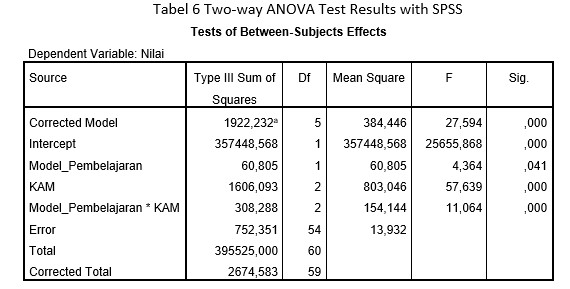
This research aims to: (1) To find out whether there is a difference in students' ability to understand concepts between students who were given Macromedia Flash media and students who were given Power Point media (2) To find out whether there is a difference in students' independent learning abilities between students who were given Macromedia Flash media. with students who were given power point media. This type of research is a quasi experiment. This research was carried out in SMA Kesatuan Meranti in the even semester of the 2021/2022 academic year. The results of the research show that: 1) There is a difference in students' ability to understand concepts between students who were given Macromedia Flash media and Power Point media, where the application of Macromedia Flash media was better than students who received Power Point media for their ability to understand concepts; 2) There is a difference in students' independent learning abilities between students who were given Macromedia Flash media and Power Point media, where the application of Macromedia Flash media was better than students who received Power Point media for students' independent learning abilities; 3) There is an interaction between learning media and student learning motivation which is used on students' ability to understand concepts; 4) There is no interaction between learning media and student learning motivation which is used on students' independent learning abilities.
Referensi
Arifah, U., & Saefudin, A. aziz. (2017). Menumbuhkembangkan Kemampuan Pemahaman Konsep Matematika dengan Menggunakan Model Pembelajaran Guided Discovery. UNION: Jurnal Ilmiah Pendidikan Matematika, 5(3), 263–272. https://doi.org/10.30738/.v5i3.1251
Emda Amna. (2017). Kedudukan Motivasi Belajar Siswa Dalam Pembelajaran. Lantanida Journal, 5(2), 93–196.
Ismawati, Y., Hartono, Y., & Destiniar, D. (2019). Kemampuan Pemahaman Konsep Matematis Ditinjau Dari Motivasi Belajar Siswa Smp Negeri 31 Palembang. Nabla Dewantara, 4(1), 46–52. https://doi.org/10.51517/nd.v4i1.103
Isnaeni, S., Fajriyah, L., Risky, E. S., Purwasih, R., & Hidayat, W. (2018). Analisis Kemampuan Penalaran Matematis dan Kemandirian Belajar Siswa SMP pada Materi Persamaan Garis Lurus. Journal of Medives : Journal of Mathematics Education IKIP Veteran Semarang, 2(1), 107. https://doi.org/10.31331/medives.v2i1.528
Mathematics, A. (2022). Analisis Kemampuan Pemahaman Konsep Matematis Ditinjau Dari Kemandirian Belajar Materi Program Linear. 2(3), 1–23.
Marfu’ah, S. (2020). Analisis Kemandirian Belajar Siswa Dalam Pembelajaran Matematika Secara Online Di SMP Negeri 1 Cilongok. SKRIPSI. IAIN Purwokerto.
Rumhadi, T. (2017). Urgensi Motivasi dalam Proses Pembelajaran. Jurnal Diklat Keagamaan, 11(1), 33–41. bdksurabaya.e-journal.id ? article ? Download
Sugiyono. (2013). Metode Penelitian Kuantitatif, Kualitatif, Dan R&D. Bandung: Alfabeta.
Suprihatin, S. (2019). Upaya Meningkatkan Motivasi Belajar Siswa. G-Couns: Jurnal Bimbingan Dan Konseling, 3(1), 73–82. https://doi.org/10.31316/g.couns.v3i1.89
Tona. Kesumawati, N., Marhamah. (2019). Kemampuan Pemahaman Konsep Matematis Berdasaekan Motivasi Belajar Siswa Melalui Model Pembelajaran LAPS-Heuristic. Jurnal Pendidikan Matematika.Vol. 7 No. 3. Hal. 417-425.
Uno, H. (2008). Teori Motivasi dan Pengukurannya. Jakarta: PT. Bumi Aksara.
Yusniati, Y., Novaliyosi., Iskandar, K. (2017). Perbandingan Kemampuan Pemahaman Konsep dan Motivasi Belajar Siswa yang Menggunakan Model Pembelajaran Kooperatif Tipe The Power Of Two dan Make A Match. JPPM. Vol. 10. No. 1. Hal. 52-59.
Unduhan
Diterbitkan
Terbitan
Bagian
Lisensi
Authors who publish with Prima: Jurnal Pendidikan Matematika agree to the following terms: Authors retain copyright and grant the Prima: Jurnal Pendidikan Matematika right of first publication with the work simultaneously licensed under a Creative Commons Attribution License (CC BY-SA 4.0) that allows others to share (copy and redistribute the material in any medium or format) and adapt (remix, transform, and build upon the material) the work for any purpose, even commercially with an acknowledgement of the work's authorship and initial publication in Prima: Jurnal Pendidikan Matematika. Authors are able to enter into separate, additional contractual arrangements for the non-exclusive distribution of the journal's published version of the work (e.g., post it to an institutional repository or publish it in a book), with an acknowledgement of its initial publication in Prima: Jurnal Pendidikan Matematika. Authors are permitted and encouraged to post their work online (e.g., in institutional repositories or on their website) prior to and during the submission process, as it can lead to productive exchanges, as well as earlier and greater citation of published work (See The Effect of Open Access).