STUDENTS’ REPRESENTATION PROFILE IN SOLVING HOTS-BASED PROBLEMS IN CLASS VIII OF SMPN 3 TOLITOLI BASED ON GENDER
DOI:
https://doi.org/10.31000/prima.v9i1.13286Kata Kunci:
representation, hots, genderAbstrak
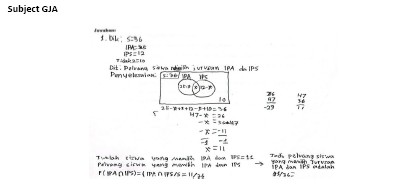
This study aims to describe the students' representation profile in solving Higher Order Thinking Skills (HOTS) based problems on chance material in class VIII of SMPN 3 Tolitoli, in terms of gender. The representations studied include three aspects: visual, verbal, and symbolic. This research used descriptive method with qualitative approach. The research subjects consisted of two students with high mathematical ability, one male student and one female student. Data were collected through HOTS-based tests and in-depth interviews. The results showed that male students tended to excel in visual and symbolic representations, able to present data in the form of diagrams and solve problems using mathematical expressions well. On the other hand, female students are more dominant in verbal representations, especially in writing down interpretations and solution steps in detail. This research emphasizes the importance of a representation-based learning approach to improve students' higher order thinking skills, taking into account the characteristics and advantages of each subject.Â
Unduhan
Diterbitkan
Terbitan
Bagian
Lisensi
Authors who publish with Prima: Jurnal Pendidikan Matematika agree to the following terms: Authors retain copyright and grant the Prima: Jurnal Pendidikan Matematika right of first publication with the work simultaneously licensed under a Creative Commons Attribution License (CC BY-SA 4.0) that allows others to share (copy and redistribute the material in any medium or format) and adapt (remix, transform, and build upon the material) the work for any purpose, even commercially with an acknowledgement of the work's authorship and initial publication in Prima: Jurnal Pendidikan Matematika. Authors are able to enter into separate, additional contractual arrangements for the non-exclusive distribution of the journal's published version of the work (e.g., post it to an institutional repository or publish it in a book), with an acknowledgement of its initial publication in Prima: Jurnal Pendidikan Matematika. Authors are permitted and encouraged to post their work online (e.g., in institutional repositories or on their website) prior to and during the submission process, as it can lead to productive exchanges, as well as earlier and greater citation of published work (See The Effect of Open Access).